If you haven’t watched Barstool Spring Break House yet, it’s definitely worth a look. Not just for the DRAMA and entertainment, but for the genius marketing strategy they’re using the show for.
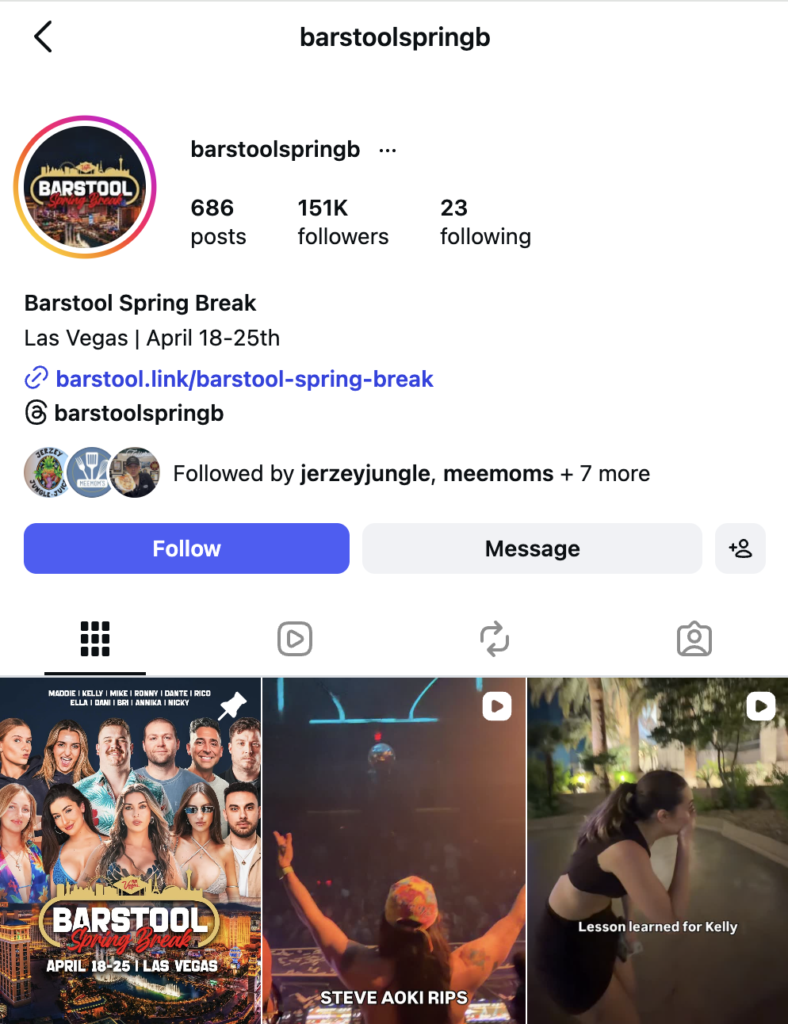
At face value, it feels chaotic and ridiculous. A bunch of Barstool Sports personalities packed into a house, where they’re drinking, arguing and stirring up drama. It checks every box of a traditional reality show. And even has the same features that made shows like Jersey Shore or Love Island so addictive (i.e. confessionals + live recaps).
But what makes this different, and honestly more interesting, is how it’s distributed.
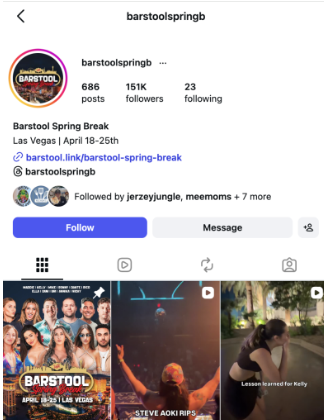
This isn’t something you sit down and watch on Netflix. It lives entirely on social. The episodes are fragmented into short clips across Instagram, designed to be consumed in pieces rather than in a linear storyline. And that’s where the strategy starts to click.
Most clips don’t fully explain what’s happening. You’ll catch a fight mid-argument, a joke without context, or a moment that feels like you missed the setup. That’s intentional. It creates a loop where the only way to understand what’s going on is to click into the profile and keep scrolling.
They’ve truly found a way to engineer and monetize curiosity.
This is actually the second time they’ve pulled this off. The Spring Break series is an evolution of Barstool Summer House, which followed a similar format but leaned more into a laid-back, seasonal vibe that was essentially a modern day version of The Jersey Shore, literally taking place at the Jersey Shore. What they’ve done now is jam pack all that drama into a week, in a place where people forget reality… Las Vegas.
From a marketing perspective, this is where it becomes a masterclass.
Barstool isn’t just creating a show—they’re building a massive, highly engaged audience inside a platform they don’t own, but fully control in terms of distribution and attention. Every view, every profile click, every follow compounds into an audience pool they can retarget, monetize, and leverage.
And that matters because Barstool Sports isn’t just a media company, but an advertising machine. They partner with a huge range of brands across sports betting, alcohol, apparel, and more.
So instead of relying solely on borrowed audiences through ads or sponsorship placements, they’re building their own to leverage.
Now, when they go to a brand, they’re not just offering impressions, they’re offering access to an audience they’ve already captured and trained to engage. That’s a completely different value proposition.
It also lowers their dependency on traditional paid media. The content itself becomes the acquisition engine.
There’s another layer here too: volume and speed. Because the content is low-production and social-first, they can move quickly. They can react in real time, double down on storylines that are working, and adjust based on engagement almost instantly. That feedback loop is something traditional media can’t compete with.
What Barstool has done with this series is package reality TV in a way that aligns perfectly with platform behavior—short attention spans, constant scrolling and the need for immediate intrigue.
The takeaway isn’t to go create a reality show. It’s to rethink how your content works. If everything you post is fully self-contained, you’re giving people no reason to come back. Barstool is doing the opposite: building content that pulls you in, keeps you curious, and turns a single view into a longer session.